

We are the generation rising
for all life on Earth


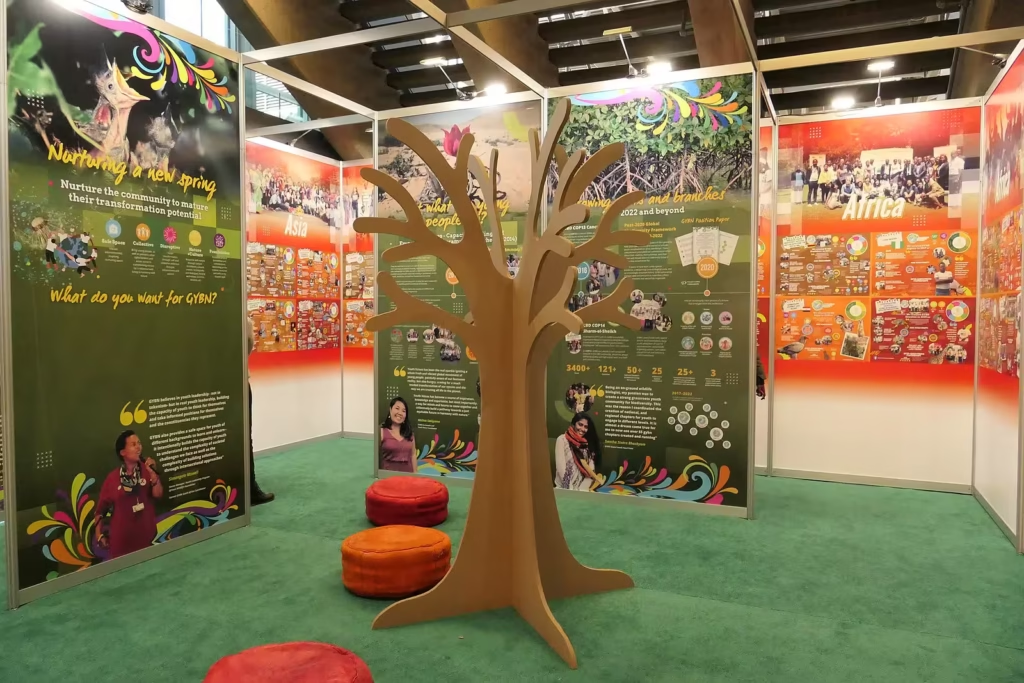
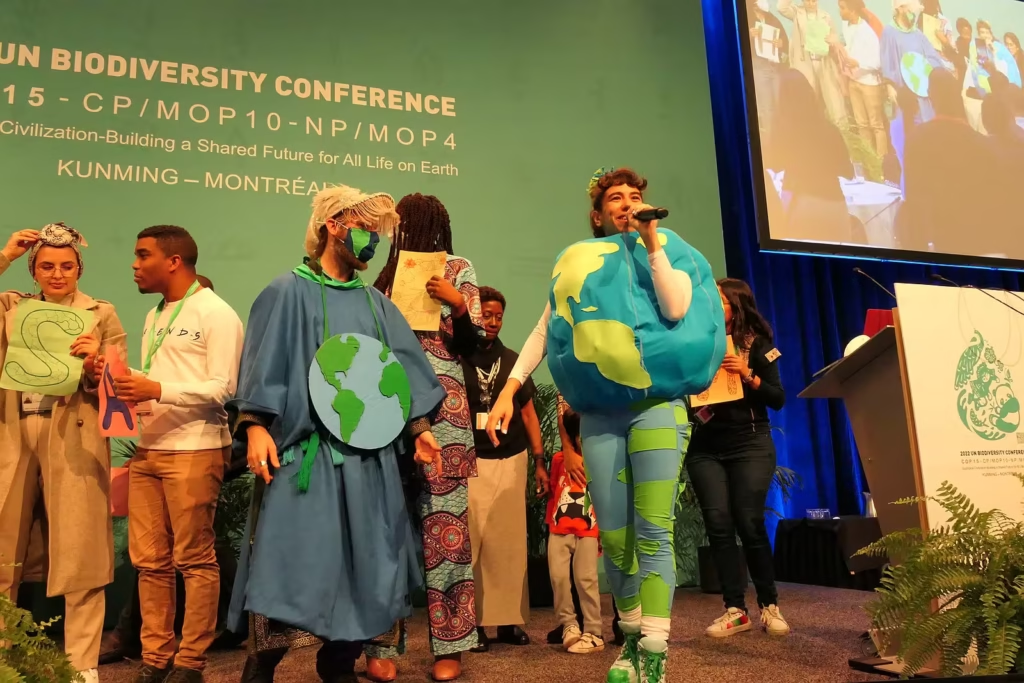
Since 2022, GYBN’s fellowship programs have been a seedbed for youth-led action—nurturing ideas, strengthening local leadership, and creating space for young people in their own communities. The spirit and impact of these fellowships have travelled far, reaching global stages like COP15 and COP16, where young leaders shared how their work is transforming the places they call home.
GYBN CHAPTERS
ACTIVITIES
SPACES IMPACTED
We are supporting young leaders to transform the places they call home
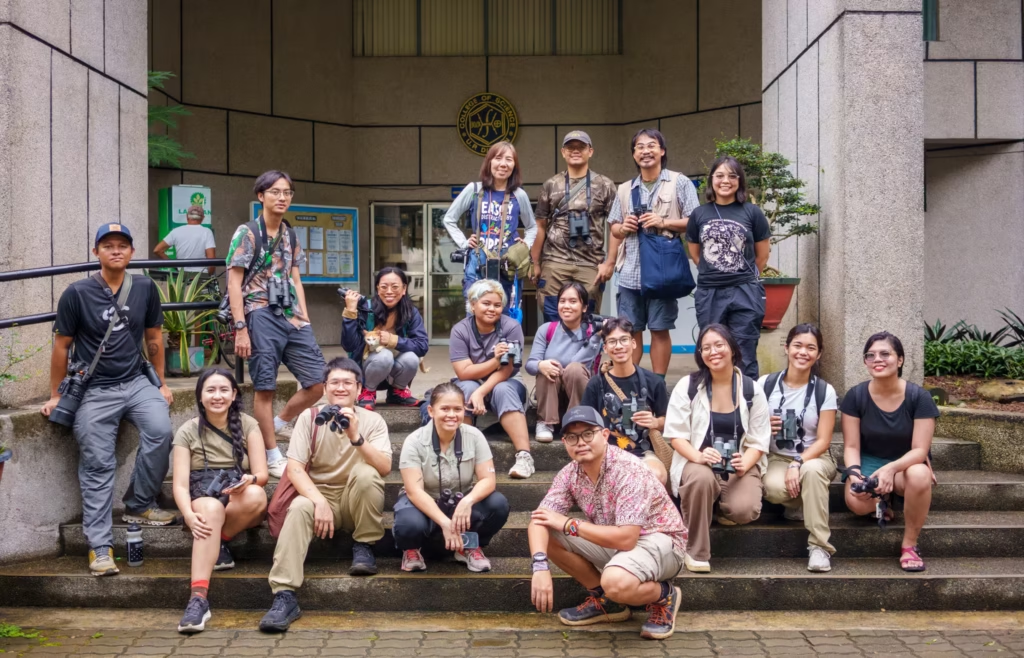
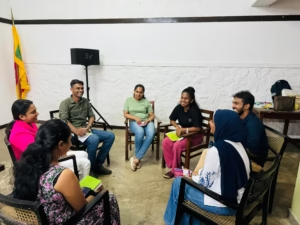
In our latest cycle, the Youth Into Action Fellowship 2024–2025, 14 GYBN Chapters received dedicated support to bring community-rooted projects to life. From Africa (regional), Bolivia, Burkina Faso, Burundi, Colombia, Guinea-Bissau, Indonesia, Madagascar, Mexico, Niger, Pakistan, South Africa, Sri Lanka, and Uganda, these chapters designed and carried out initiatives that reflect their cultures, ecosystems, and local priorities.
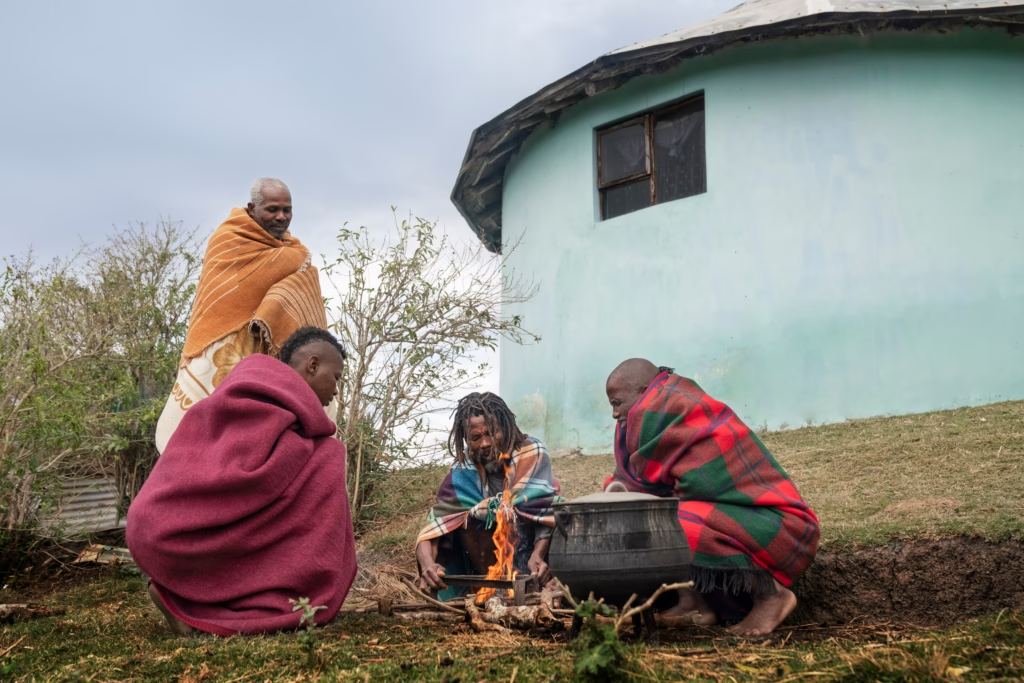
Across 77 activities—restoring landscapes, mobilizing youth, weaving art and activism, hosting workshops, deepening environmental education, and engaging Indigenous Peoples and Local Communities—fellows showed what becomes possible when young people are trusted with resources.
“Their efforts reached 267 communities, schools, and local institutions, each one becoming part of a growing network of care and action.”
AVAILABLE OPPORTUNITIES
"GYBN showed me the capacity I have within myself. "
"The capacity building workshops and meetings we had during COP15 are still resonating well to me even today."
"COP was the best two weeks of my life. I have learnt so much in the two weeks in Montreal not only about the policies and the CBD but from the GYBN community and I will always be so grateful. It seemed like my entire career + academia I had been prepping for something like the CoP and everything that I will be doing going forward will be very closely dependent on it.”
EVIDENCE
We are the generation rising
for all life on Earth
Join a global network of young changemakers
Copyright © 2025 Designed by TERRAWEB / Anderson Carreño
All Rights Reserved | Terms and Conditions | Privacy Policy

Creation of regional, national, subregional chapters, development of pilot projects.
In between COP13 and 14, GYBN successfully organised 8 Regional Capacity Building Workshops in partnership with 8 different governments, bringing over 340 participants from 120+ countries.
At COP14, GYBN was already a well-recognised network in the CBD community, known for always delivering quality and high impact work in a fresh and innovative way.
GYBN raised funds from several donors and coordinated a large youth delegation of over 50 representatives, successfully organising actions, side events, a youth forum and delivering critical statements.
In 2016, GYBN was already aware of the upcoming Post-2020 GBF Process, and started to include youth consultations in all its workshops. Those consultations prompted our community to reflect about their realities, their priorities, and their values and helped them to collectively shape a future they would strive for.
After 4 years of hard work amid a global pandemic, a deepening socio-ecological crisis, and an increasingly uncertain future, GYBN persevered and was able to transcend its capacities, efforts and expectations and successfully organized the GYBN Position Paper
And an increasingly clear picture of a future has emerged from this endeavour:
VISION:
PRIORITIES:
During COP13 in Cancun, GYBN was able to present the first results of the Youth Voices Programme: CBD in a Nutshell – A guidebook to the CBD process, and the Series of Aichi Target Infographics.
GYBN was also able to bring their third funded delegation to a CBD COP and co-organized the COP11 Youth Forum with the Government of Mexico.
After accepting that friendly challenge, the GYBN team recollected, rethinking their priorities and activities. They decided that in order to be able to effectively influence and contribute to decision-making, they needed to improve their knowledge and skills, as well as expand the network and mobilize young people especially working in biodiversity on the ground, and those coming from biodiversity-rich areas.
For the team it was also important to keep the work rooted and grounded, benefiting both biodiversity and people. This collective reflection led to the creation of GYBN’s Youth Voices Capacity Building Programme.
The Japanese Government who kept an eye on GYBN’s development committed to support this initiative, and through its Japan Biodiversity Fund and the support of the CBD Secretariat, started what would become a fruitful, long-standing partnership with GYBN.
The programme was based in 3 main areas of work: the organization of workshops, the organization and coordi-nation of youth delegations at international meetings and the development of publications and other materials.
And focused on building the capacity of young people:
GYBN collectively decided that it should focus on building a bridge between decision-making and action on the ground, through empowerment, capacity-building, policy and advocacy work.
In June 2014, GYBN members faced their first trial at the 5th meeting of the Ad Hoc Open-ended Working Group on Review of Implementation of the CBD.
When our team members, in its excitement and perhaps ingenuity, proposed to establish a youth strategy under the CBD, delegates quickly rejected the proposal, and reached out to us to question—not the legitimacy of young people to have a seat at the decision-making process—but their ability to effectively contribute to the process.
“Can young people understand enough of the issues that are being discussed to be able to contribute? What can they actually do for biodiversity on the ground? Show us what young people can do?”
These questions made our team reflect and realize that although youth participation is legitimate and necessary, it is important for young people to also understand their role in decision-making processes and how they can contribute to it.
Responding to this challenge, GYBN secured support from different parties and was able to bring the first funded youth delegation to a CBD COP, strengthening alliances and the standing of young people in the biodiversity community.
During the High-Level Segment, GYBN was able to present and launch the Youth Voices Capacity Building programme, showing the network’s commitment to participate in the decision-making process related to biodiversity both at the national and international level, as well as contribute to the discussions and to the achievement of the objectives of the Convention.
Due to the preparatory work enabled by the Kick-off meeting, GYBN was able to “debut” at COP11 in Hyderabad with a motivated group of interim steering committee members that financed their participation with their own private resources.
GYBN members voted Christian Schwarzer from Germany and Melina Sakiyama from Brazil as Global North and South Focal Points, and under their care, GYBN was able to stir COP11 up, bringing a fresh wave of people, actions and ideas to the international biodiversity policy arena.
GYBN’s passage through COP11 was very fruitful, starting important alliances and collaborations with other major groups such as the Women Caucus and the International Indigenous Forum on Biodiversity, as well as other networks and organizations. It also gathered enough support from country delegates, who approved an unprecedented COP decision, acknowledging young people and encouraging their youth participation in decision-making processes.
However, the journey to establish GYBN would not be as smooth. After COP10, most of the participants were not able to remain volunteering with the group due to school and other career commitments.
Even though the idea of supporting the participation of young people in decision-making processes was being generally welcomed, at that stage there were no established mechanisms nor institutional arrangements that could enable this; so, it was a challenge for the group to implement the follow-up steps and remain active.
Finally, in 2012, Christian Schwarzer, GYBN Co-founder was able to secure support from the German government and his organization (NAJU) to reactivate the network and organize a kick-off conference for GYBN in Berlin.
That conference was key in building a new momentum for youth engagement and provided an opportunity to gather the interim steering committee as well as other active youth to give continuity to the plans made in Nagoya and start building the basic structures, rules and priorities for GYBN.
This meeting also helped the group prepare priorities and an engagement strategy for COP11 that would be happening later on in Hyderabad, India.
Following the excitement of discussing a future in harmony with nature among so many like-minded youth in the IYCB, a group of representatives from the conference joined COP10 in Nagoya, Japan.
There, they were able to present the outcomes of the conference during the COP, managing to earn the support of many different organizations including the CBD Secretariat, that committed to assist this group in establishing the network.
An Interim steering committee was created to implement the follow-up activities from the IYC.
Between 2008-2010, several youth conferences on biodiversity were organized by different governments, agencies and organizations in preparation for the CBD COP 10 in Nagoya and the adoption of a new strategic plan for biodiversity conservation.
These gatherings culminated with the International Youth Conference on Biodiversity organized by the Japanese COP Presidency in 2010 which brought over 100 youth from over 60 countries together.
A group of active participants came forward with the intent to create a global youth coordination platform for biodiversity and received strong support from the CBD Secretariat.